Miles Davis Volume 1: The Blue Note Album I Keep Coming Back To
By Giuseppe Cucchiara, jazz bassist based in New York City
Ask most listeners about Miles Davis and they'll point to Kind of Blue or the first and second quintets. But one of the Miles Davis albums I keep going back to is Miles Davis Volume 1, released on Blue Note Records (BLP 1501). These recordings, from sessions in 1952 and 1953, precede the more famous quintet years — and I find them fascinating for three reasons: the personnel, the choice of tunes, and the arrangements.
As a bass player, I also can't stress enough how important the two rhythm sections on this record are: Percy Heath with Art Blakey, and Oscar Pettiford with Kenny Clarke. That's four architects of modern jazz rhythm on a single album.
What Is Miles Davis Volume 1?
Miles Davis Volume 1 is a Blue Note compilation of early-1950s sextet sessions recorded in New York, before Davis formed his so-called first quintet with John Coltrane. The band features a young Miles alongside trombonist J.J. Johnson and tenor saxophonist Jimmy Heath, with two of the finest bass-and-drums pairings of the bebop era. If you want to understand where the Miles of Walkin' and the Prestige years came from, this is essential listening.
Here are two tracks from Volume 1 that I especially recommend, and what to listen for in each.
"Enigma": J.J. Johnson's Deceptive Ballad
"Enigma" is a beautiful ballad written and arranged by J.J. Johnson. What makes it fascinating harmonically: Johnson moved the key of the tune from C to D-flat major — yet the first four bars are deceivingly in C major. Listen closely to the top of the melody and you can hear the harmony pull you toward one key before the tune settles somewhere else entirely. It's a small arranging decision that gives the ballad its mysterious, suspended quality — the title is no accident.
"Ray's Idea": Art Blakey's Drive from Start to Finish
The second track I'd feature is "Ray's Idea," co-written by bassist Ray Brown with Gil Fuller. As a bass player, I've always enjoyed the fact that Miles chose to record a tune by one of the great bassists in jazz history.
What I love most about this take is Art Blakey's drive throughout — the forward motion never lets up — and the way he ends the tune. And don't miss Jimmy Heath's line at around 2:31: a perfect example of the language this band was speaking in 1953.
Personnel on "Enigma" and "Ray's Idea" (April 20, 1953 session)
Miles Davis – trumpet
J.J. Johnson – trombone
Jimmy Heath – tenor saxophone
Gil Coggins – piano
Percy Heath – bass
Art Blakey – drums
Why the Rhythm Sections Matter
Across the Volume 1 sessions you hear two distinct rhythm-section concepts. Percy Heath and Art Blakey bring weight and propulsion. Oscar Pettiford and Kenny Clarke, on the other tracks, offer something lighter and more conversational. Comparing the two on a single album is a masterclass in how a bassist and drummer shape everything the soloists can do.
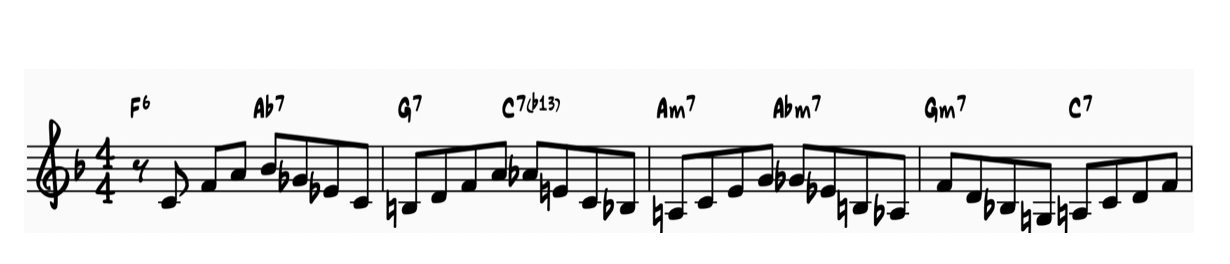
Jimmy Heath line at circa 2:31 on Ray’s Idea
FAQ
When was Miles Davis Volume 1 recorded? The album compiles Blue Note sextet sessions from 1952 and 1953 in New York City. "Enigma" and "Ray's Idea" both come from the April 20, 1953 session.
Who wrote "Enigma"? Trombonist J.J. Johnson wrote and arranged "Enigma," transposing it from C to D-flat major while keeping the opening four bars sounding deceptively in C.
Who wrote "Ray's Idea"? Bassist Ray Brown and arranger Gil Fuller. It was originally associated with Dizzy Gillespie's big band before Miles recorded it.
Is this before the first Miles Davis quintet? Yes — these sessions predate both the first quintet (with John Coltrane) and the second quintet of the 1960s.
Giuseppe Cucchiara is an Italian jazz bassist based in New York City. For upcoming concerts and more listening guides, visit giuseppecucchiara.com.
